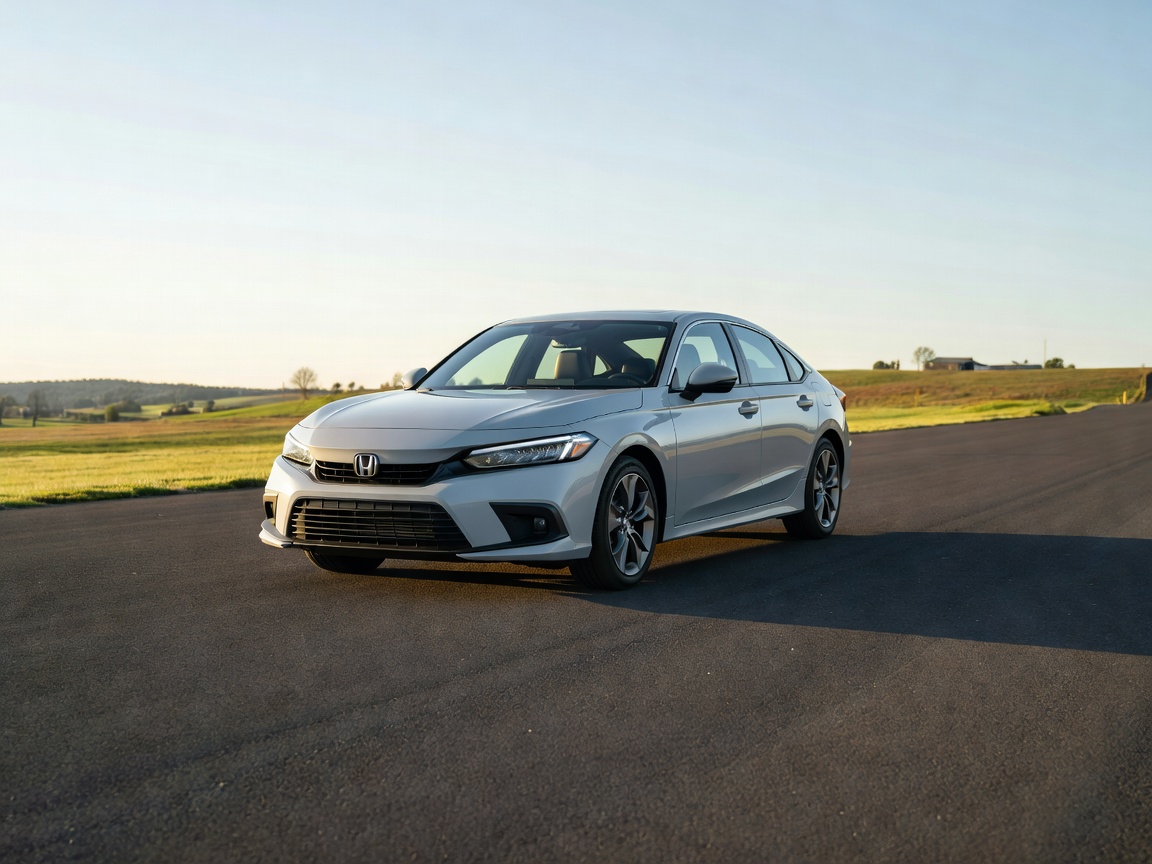
Why the Honda Civic Works for First-Time Drivers
Learning to navigate high-speed motorway merges, parallel parking in tight urban spaces, and managing poor weather requires a car that provides unambiguous feedback. The 11th-generation Honda Civic solves these anxieties through intentional structural design: the windshield pillars (A-pillars) are pushed back by nearly two inches and mounted further outwards, eliminating the massive blind spots typical of modern compact vehicles.
Standard Safety Architecture: Honda Sensing
Every Civic model comes standard with the full Honda Sensing suite, which includes:
- Collision Mitigation Braking System (CMBS): Employs wide-angle front monocular cameras to identify pedestrians, cyclists, and suddenly stopping vehicles ahead, initiating progressive emergency braking before physical driver intervention.
- Road Departure Mitigation (RDM): Detects paint markings and pavement edges. If you drift unintentionally without an active turn indicator, gentle steering torque guides you back into lane.
- Traffic Sign Recognition: Scans speed limits and displays them continuously on the digital cluster screen, helping newly licensed motorists stay within legal speed boundaries effortlessly.
Real-World Ownership Costs & Insurance Impact
Because parts for the Honda Civic are plentiful and mechanics across North America and Europe possess extensive familiarity with the platform, replacement panels, mirrors, and headlight clusters cost up to 35% less than European compact counterparts. Insurance underwriters classify standard Civic trims in moderate insurance tiers (Groups 12 to 14), making first-year coverage significantly more manageable.
Pros & Cons for Beginner Drivers
- Pros: Impeccable crash-test safety scores, balanced steering resistance, spacious boot storage for college and gear, top-tier resale retention.
- Cons: Ride height is slightly lower than crossovers, making steep parking curb clearance something novices must monitor carefully.